Linux Systems for Cybersecurity (CYSE 270)
What this course was and why it mattered
CYSE 270 was my hands-on introduction to Linux as a working environment for security. Almost everything I do in offensive tooling and system administration runs on Linux, so this course was the foundation for the technical side of my work. It gave me the commands, habits, and vocabulary I still lean on whenever I pick up a new tool.
The work
Over eleven labs and several assignments, I built and managed virtual machines, navigated the file system, edited files in Vim, and created and managed users and groups. I worked with file permissions, partitioned and mounted virtual disks, wrote shell scripts, automated backups with cron, calculated subnets, and configured Linux networking in NAT and bridged mode. One lab also introduced me to password cracking with John the Ripper.
Selected evidence
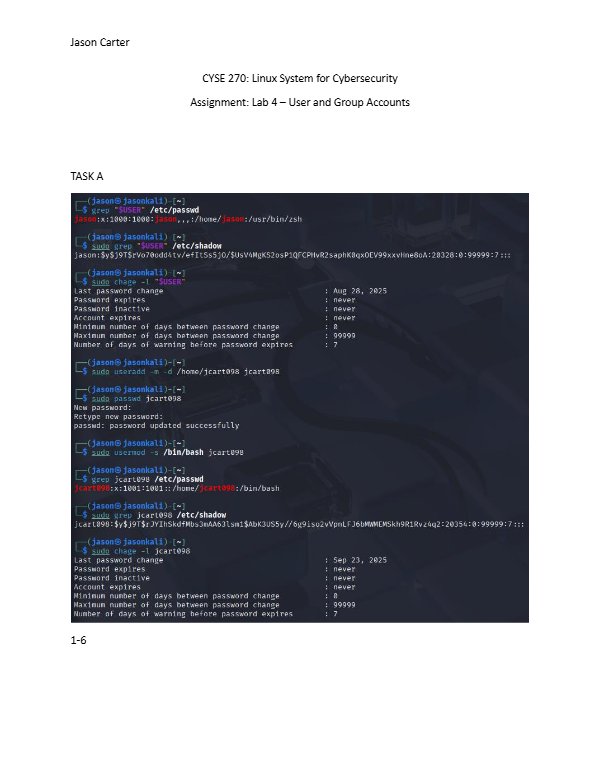
User and group management (Assignment 4). I chose this because managing who can access what is the base layer of system security. This assignment had me create and manage users and groups in Linux.
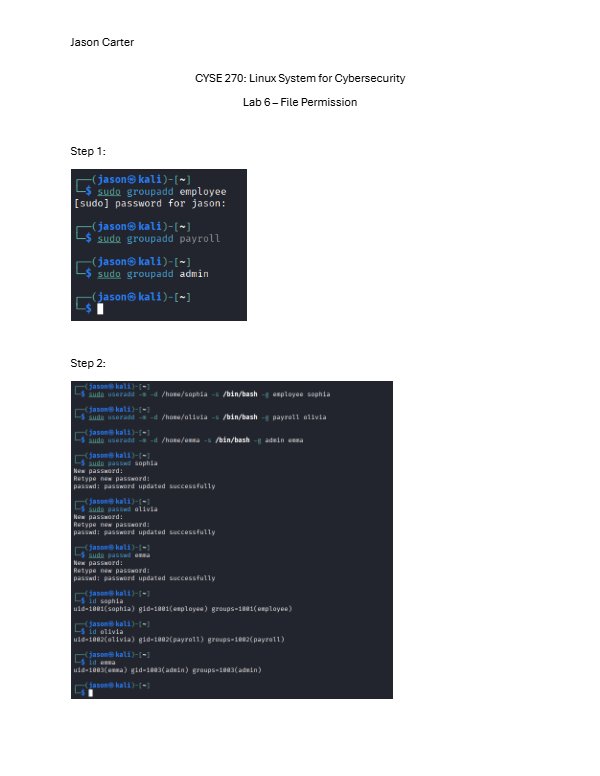
File permissions (Lab 6). This lab showed me how to restrict files and directories to specific users and groups. Access control matters a lot to me because it’s central to the compliance work I do at my internship.
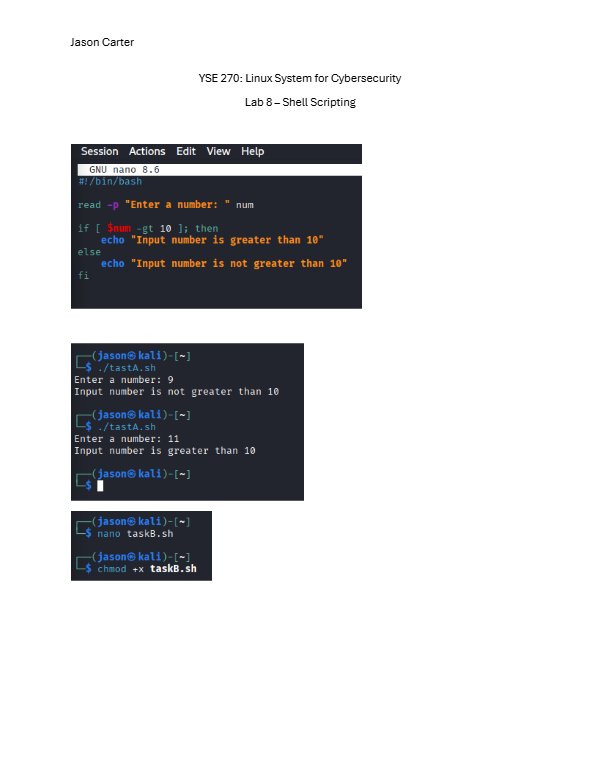
Shell scripting (Assignment 8). I included this because it was where I started automating tasks instead of repeating them by hand. In it I wrote and ran basic shell scripts to automate simple tasks.
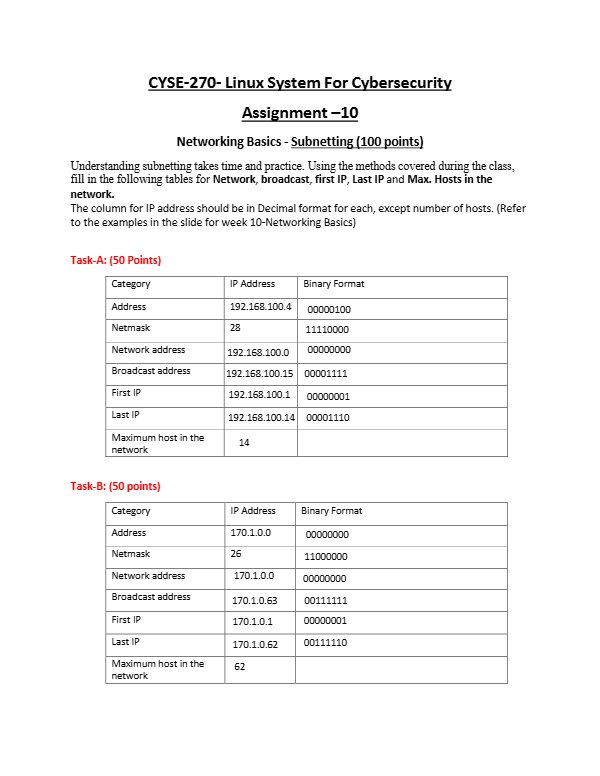
Networking (Assignment 10 and Lab 11). These covered subnet calculation and configuring and testing Linux network settings. They gave me the networking fundamentals I rely on when scanning and assessing systems.
Reflection
This course taught me how Linux works from the inside: the file system, user and group management, scripting, scheduling, and networking. Vim was the hardest part for me. It felt unintuitive at first, and learning it taught me to push through a tool until it makes sense. Those fundamentals now support my IT deployment work at RFK Solutionz, where I configure workstations, and my compliance research, where access control is a core requirement. I want to keep building on this foundation and use Linux to its full capacity.