Cybersecurity Techniques and Operations (CYSE 301)
What this course was and why it mattered
CYSE 301 is where I moved from theory into hands-on offensive and defensive practice: network scanning, vulnerability assessment, password cracking, and penetration testing in a controlled lab environment. It built directly on what I learned in CYSE 270, and it became one of the courses that most shaped how I think about security work, because it made me understand why a system was vulnerable, not just that it was.
The work
Each lab was hands-on and individual. I ran the attack or the scan myself, documented what I found, and explained it as if I were reporting to a real organization. Over the semester I worked with Nmap, Metasploit, Burp Suite, and Hashcat, and I configured pfSense firewall rules to defend the same networks I was attacking.
Selected evidence
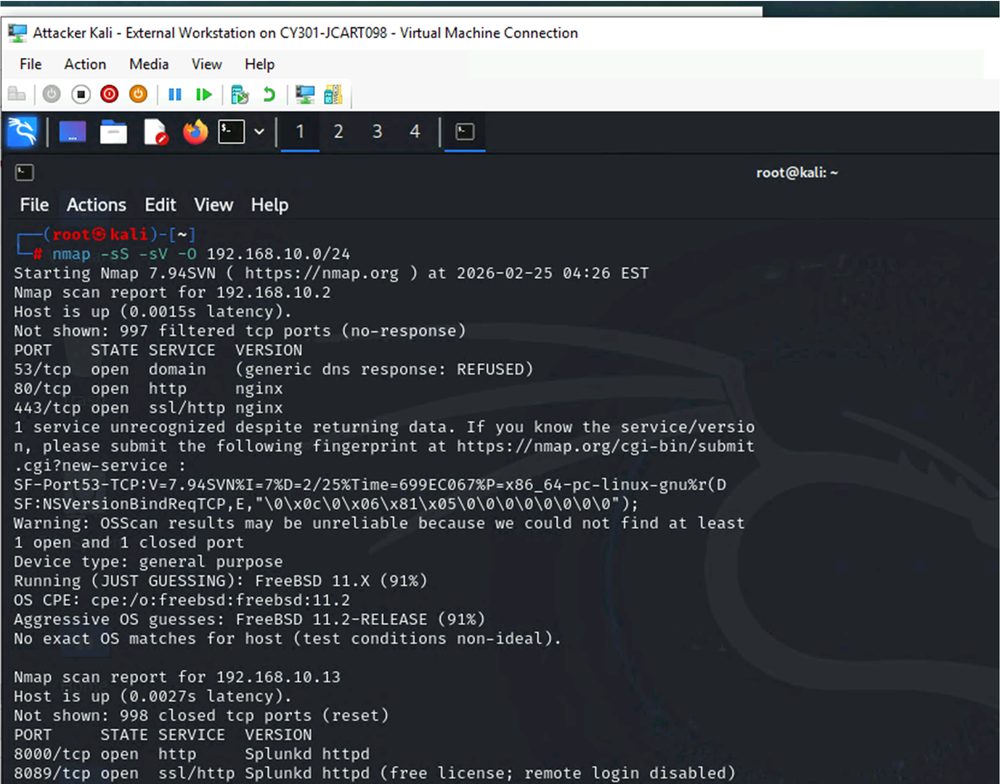
Sword vs. Shield lab. I scanned the lab subnet as the attacker before hardening the firewall. After adding my pfSense rules, I rescanned, and most of the ports came back as filtered. I picked this lab because it shows both halves of the job in one place: finding the exposure, then fixing it and proving the fix worked.
Reflection
The biggest challenge was translating a technical result into something a non-technical reader could use. Getting a shell or cracking a password is only half the job. Explaining the risk and the fix clearly is the other half, and I had to develop that skill deliberately.
This course is the hands-on foundation I brought into my CYSE 368 internship at RFK Solutionz, where I used the same tools for offensive-security testing and CTF development. It confirmed that I want a career where hands-on technical work meets the compliance and policy side of security.